Introduction
Silicone scar patches are widely accepted as an effective non-invasive treatment for managing and improving various scars. This article explores the effects of silicone scar patches on different scar types, including hypertrophic scars, keloid scars, atrophic scars, and contracture scars.
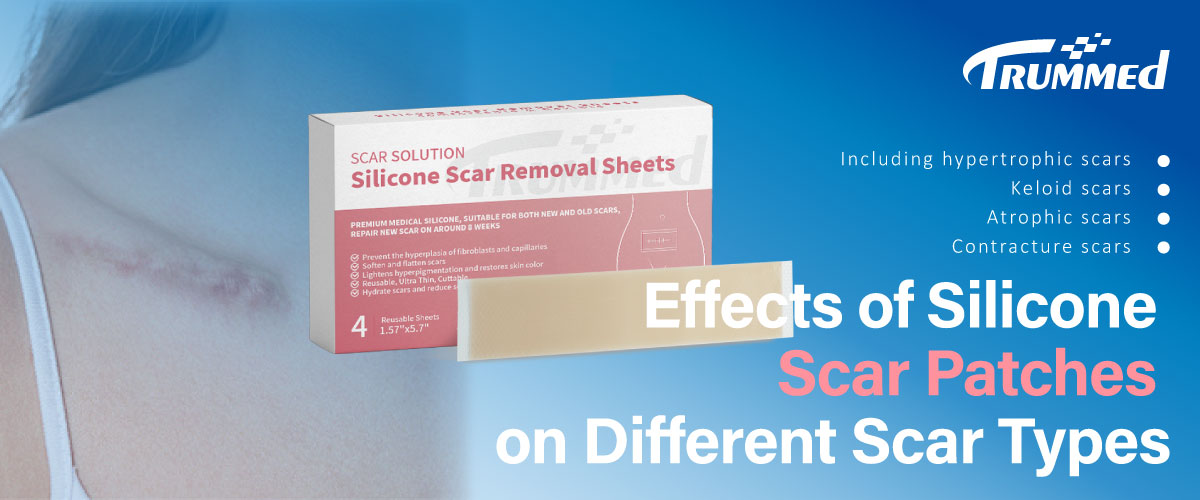
Severe scar types and the effects of silicone scar patches
1. Hypertrophic and keloid scars
Hypertrophic scars are raised, red, and stiff, usually caused by surgical incisions, injuries, or burns, while keloid scars extend beyond the original wound boundaries and are characterized by overgrowth of dense tissue.
Silicone scar patches are effective for both types of scars because they create a moist healing environment to regulate collagen production. This helps reduce redness and thickening, softens scar tissue, and relieves itching and discomfort. For keloid scars, the gentle pressure of the patch inhibits overgrowth and can prevent recurrence after surgery. Long-term use can significantly improve the texture and appearance of these scars, making them less noticeable.
2. Atrophic scars
Atrophic scars are indented or sunken due to tissue loss, often caused by acne or chickenpox.
Silicone scar patches can support overall skin healing and reduce discoloration around the scar area. Their role in treating atrophic scars is more about providing a supportive environment for skin regeneration.
3. Contracture scars
Contracture scars occur when a large area of skin is damaged, resulting in tightness and limited mobility, often due to severe burns.
Silicone patches can improve flexibility and reduce the tightness and discomfort of contracture scars by keeping the scar area moist and more pliable. They are beneficial in combination with other treatments, such as physical therapy, to address the functional limitations caused by these scars. Continued use helps restore mobility and improves the patient's quality of life.
How Silicone Scar Patches Work
Silicone scar patches work by forming a semi-occlusive layer over the scar, maintaining a moist environment that promotes optimal healing conditions. This environment helps regulate fibroblast activity and collagen deposition, which are key factors in scar formation and remodeling. The gentle pressure applied by silicone patches helps smooth raised scars and prevent excess collagen buildup.
In addition, by covering scars, silicone patches protect scars from external irritants, mechanical stress, and UV radiation, which can exacerbate scar formation and appearance.
The effectiveness of silicone scar patches generally requires continued and long-term use to see significant improvements, and patients need to be diligent in using the patch as recommended by their healthcare provider.

Conclusion
Silicone scar patches offer a versatile and effective solution for treating various types of scars. They are particularly beneficial for hypertrophic and keloid scars, reducing thickness, redness, and discomfort. For contracture scars, they improve flexibility and reduce tightness. Understanding the specific effects and limitations of silicone scar patches for different types of scars is essential to optimize treatment outcomes and improve the quality of life for patients with scars.