Over the past 15 years, there has been a significant surge in the utilization of occlusive dressings, becoming an indispensable element in the wound healing process. In the past, synthetic wound dressings were nearly invisible in the market, but in recent years, the expenditure on these dressings alone is estimated to have reached $350 million, signaling a major transformation in the field of medicine. The market has witnessed explosive growth, with numerous brands of occlusive dressings available today.
The hallmark of occlusive dressings is maintaining a moist wound surface when in place. This characteristic prevents the transmission of water vapor from the wound surface to the atmosphere, ensuring the wound remains moist. Maintaining a moist wound environment is crucial, aiding in the acceleration of epithelialization, improvement of granulation tissue in chronic wounds, and facilitating painless, autolytic debridement of necrotic ulcers. Occlusive dressings also act as a protective barrier, shielding the wound bed from environmental toxins and microorganisms.
One of the primary advantages of occlusive dressings is their role in reducing wound pain and promoting aesthetically pleasing outcomes – less noticeable scars. Additionally, these dressings have shown potential cost-effectiveness in treating certain wounds by reducing the nursing time required for wound care. These dressings contribute to increased patient comfort, pain relief, and overall improved outcomes in the field of wound management.
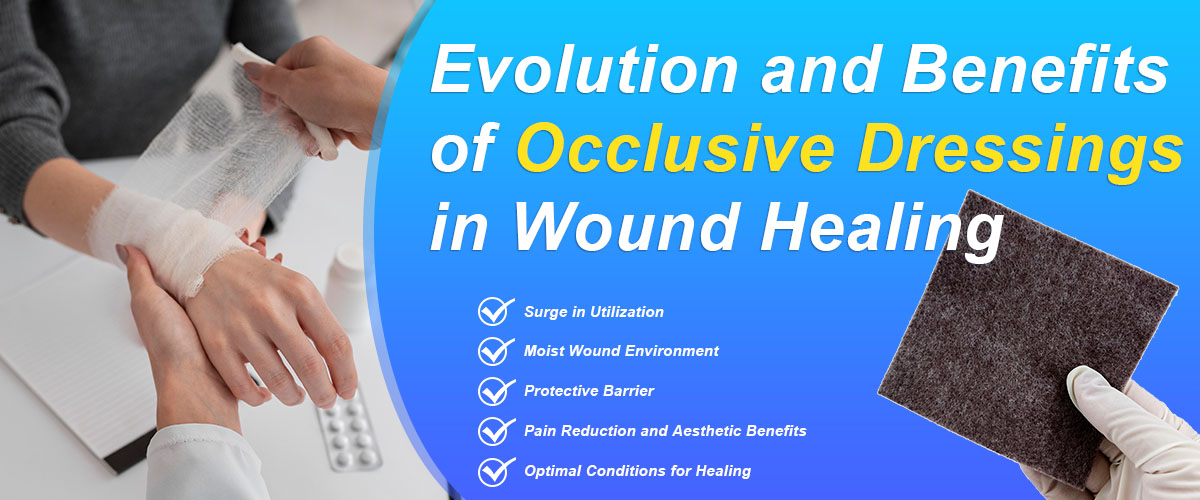
Traditionally, moist dressings have been used for wound dressing. However, it is now recognized that dressings creating and maintaining a moist environment provide optimal conditions for wound healing. The moist environment under occlusive dressings not only enhances epithelialization but also promotes healing through moisture itself and the initial presence of low oxygen tension (promoting the inflammatory phase). Gauze does not exhibit these properties; as it dries, it may be disruptive to healing wounds and cause tissue damage upon removal.
Occlusive dressings increase cell proliferation and activity by retaining an optimum level of wound exudate, containing vital proteins and cytokines produced in response to injury. This aids in autolytic debridement of the wound and promotes healing. Concerns about an increased risk of infection under occlusive dressings have not been substantiated in clinical trials.
As this field continues to innovate, we look forward to future breakthroughs, providing patients with faster and more effective wound healing experiences. On the path of wound care, occlusive dressings will undoubtedly continue to play a crucial role, shaping a more humane and efficient medical future.